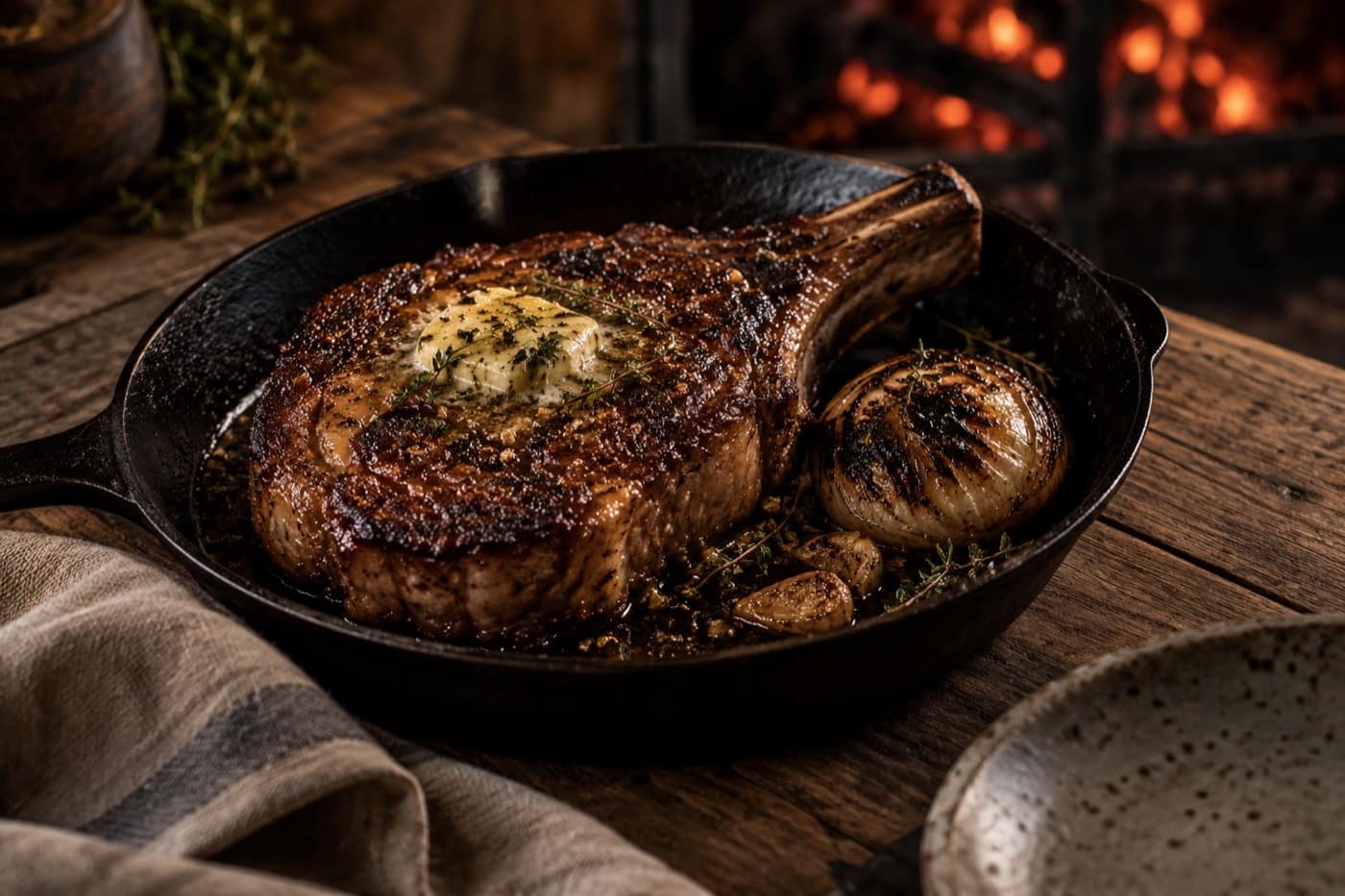
The ribeye on our menu spends forty-two days in the aging room before anyone orders it. It hangs in cold, moving air. Nobody touches it. Tonight it meets the fire.
Dry-aging is slow on purpose. Over those weeks the beef gives up water, and what stays behind gets deeper. The outside dries to a hard crust, and we trim that away before the steak is cut. What's left tastes more like beef than beef usually does. People call it nutty. We call it aged.
Why we age it in house
We could buy steak someone else aged. We don't. Doing it ourselves means we know the day it went in and the day it comes out. Forty-two days is where we landed. Any shorter and it eats like a good steak. Any longer and the aging starts to crowd out the meat.
So the ribeye is never rushed. When the aging room says it's ready, it's ready. Until then, it waits.
Tell us how you like it and we'll cook it that way. Medium rare is where the aging shows best. Not sure? Ask, and we'll give you a plain answer.
From the aging room to the coals
Once it's cut, the steak goes over the open hearth. Wood fire and live coals do the work. A fire runs hotter in some spots than others, so the outside chars while the inside stays where you asked for it. Then it rests before it comes to you.
On the plate:
bone-in ribeye, roasted garlic butter, charred onion
Dry-Aged Ribeye, $58.
Order the Wood-Fired Sourdough beside it, $12. It comes out of the same fire, and it's what you want for the butter left on the plate.
- Tuesday to Thursday, 5 to 10 pm
- Friday and Saturday, 5 to 11 pm
- Sunday brunch, 10 am to 2 pm
Book the table; we'll keep the fire going.